
Oven Shuts Off Mid-Cycle: Main Causes and Solutions
If your oven shuts off mid-cycle, the most common causes are a faulty temperature sensor, an overheating control board, a failing igniter or heating element, or a loose electrical connection. Some of these issues can be checked safely at home like making sure the door seals properly and the breaker hasn’t tripped but recurring shutoffs almost always point to a part that needs professional diagnosis and replacement. Ignoring the problem can lead to unevenly cooked food, wasted energy, or in some cases, a safety hazard.
Below, we break down exactly why this happens, what our technicians see most often in the field, and how to know whether it’s a quick fix or time to call for oven repair.
Why Does My Oven Keep Shutting Off Mid-Cycle?
An oven that shuts off partway through cooking is one of the most common service calls we get. In most cases, it isn’t random it’s the appliance protecting itself (or you) from a component that isn’t working the way it should.
One of the most common issues our technicians see is a faulty temperature sensor. When the sensor sends inaccurate readings to the control board, the oven can misread the internal temperature, overheat, and shut off as a safety measure even though the food isn’t fully cooked. We also frequently find that the problem traces back to a control board that’s overheating itself, often due to poor ventilation around the appliance or a failing cooling fan inside a self-cleaning model.
Common Causes of an Oven Shutting Off Mid-Cycle
1. Faulty Temperature Sensor (Thermostat Probe)
The sensor is a small rod usually located at the back of the oven cavity. When it degrades or shifts out of position, it feeds bad data to the control board, which can trigger the oven to cut power unexpectedly. This is one of the most frequent culprits we replace on service calls.
2. Overheated or Failing Control Board
The control board manages every function in the oven. If it overheats often due to a failed cooling fan, blocked vents, or general wear it may shut the unit down to prevent damage. Once a board starts failing, shutoffs tend to become more frequent over time rather than resolving on their own.
3. Weak or Failing Igniter (Gas Ovens)
On gas models, a weak igniter may not draw enough current to keep the gas valve open, causing the flame to cut out and the oven to stop heating mid-cycle.
4. Damaged Heating Element (Electric Ovens)
A bake or broil element with a visible blister, crack, or break point can lose consistent power, causing the oven to cycle off or fail to reach temperature.
5. Loose or Corroded Electrical Connections
Vibration from regular use can loosen wiring connections at the terminal block or control board over time. Loose connections cause intermittent power loss, which can look identical to a control board failure until a technician tests it directly.
6. Door Seal or Door Switch Issues
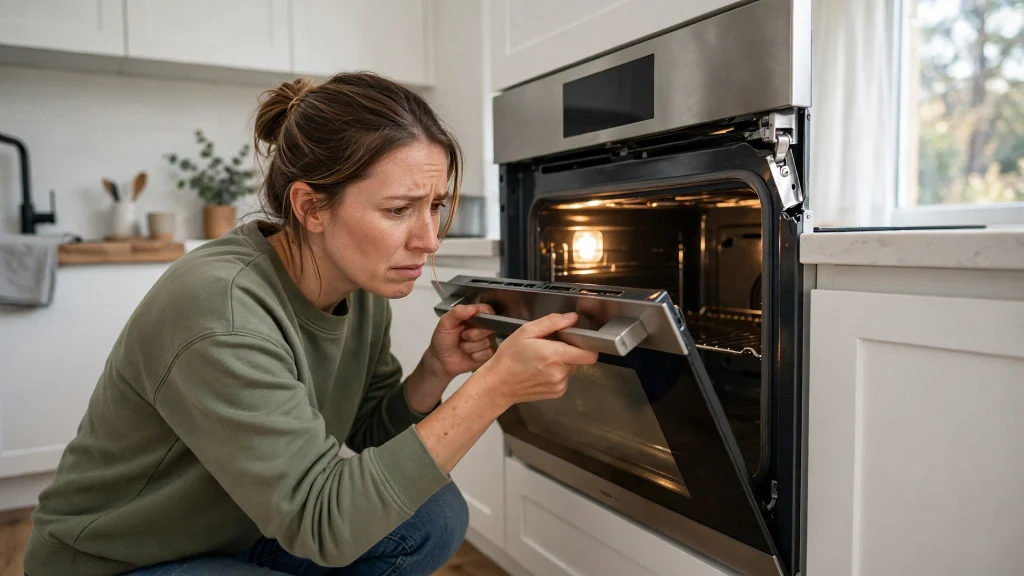
If the oven door isn’t sealing properly, or the door switch is misreading whether the door is open or closed, the unit may shut off to prevent overheating or as a false safety trigger.
7. Tripped Breaker or Power Supply Issues
Less common, but worth ruling out first: a partially tripped breaker or a loose power connection can cause an oven to lose power intermittently, especially on high-wattage cycles like broil or self-clean.
Signs You Need Oven Repair
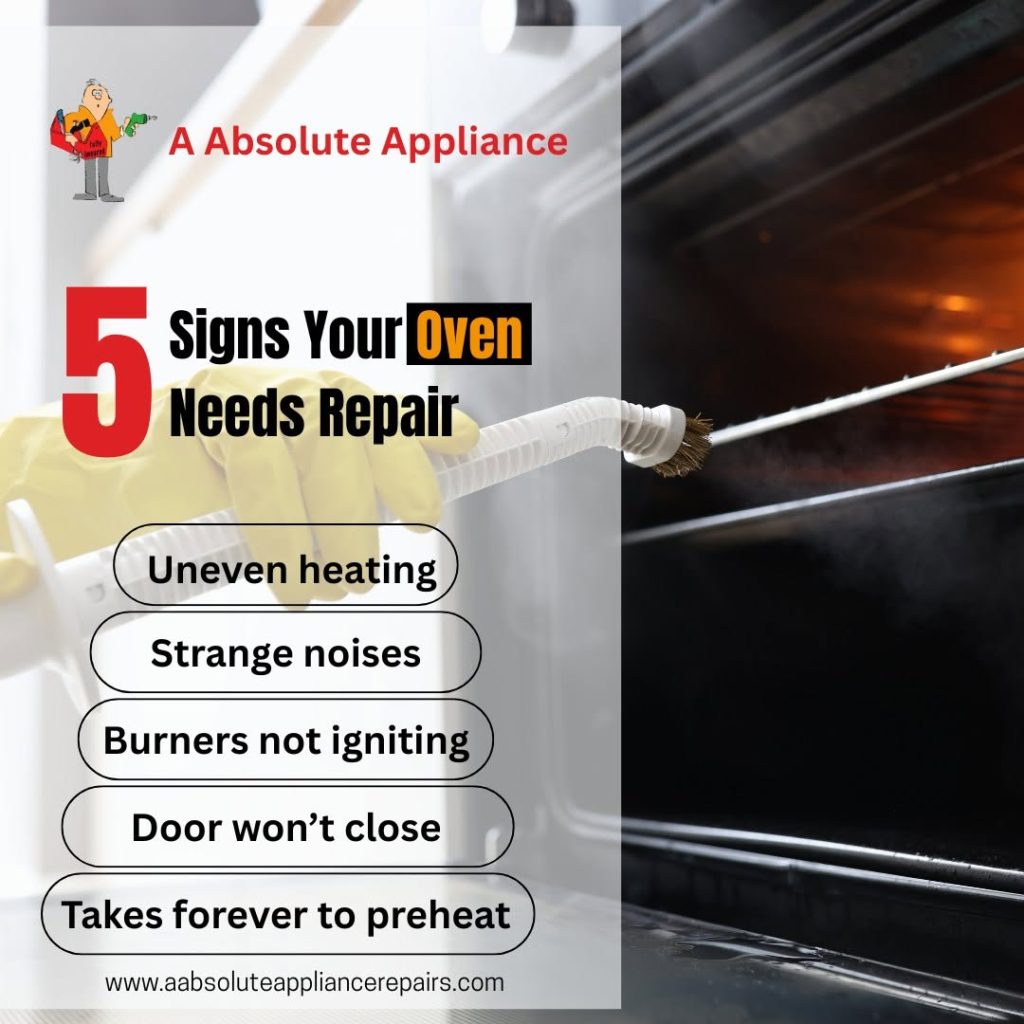
Watch for these warning signs alongside mid-cycle shutoffs:
Food consistently undercooked or unevenly cooked
Oven takes longer than usual to preheat
Display shows an error code before shutting off
Burning smell, buzzing, or clicking sounds from the control panel
Oven shuts off more frequently on longer cook or bake cycles
Self-clean cycle never completes
If you’re noticing more than one of these signs, it’s a strong indicator that a component has already started to fail rather than a one-time glitch.
Can You Fix It Yourself?
A few checks are safe to do before calling for service:
Check the breaker. A partially tripped breaker can cause intermittent power loss that mimics a bigger problem.
Inspect the door seal. Look for gaps, tears, or debris preventing a full seal.
Clean the vents. Blocked vents can cause the control board to overheat and shut down as a protective measure.
Note any error codes. Write down the exact code displayed before the shutoff this speeds up diagnosis significantly.
What we don’t recommend doing yourself: opening the control panel, testing the temperature sensor with a multimeter, or replacing a heating element or igniter without disconnecting power at the breaker first. These repairs involve high-voltage components, and a misdiagnosis often means paying for a part that wasn’t actually the problem.
Is It Safe to Use an Oven That Shuts Off Mid-Cycle?
It depends on the cause, but we generally advise against continuing to use it until it’s diagnosed. An oven that shuts off due to a failing control board or loose wiring can pose an electrical or fire risk, and one that shuts off due to sensor issues may not be reaching safe cooking temperatures a real concern with meat, poultry, and other foods that need to hit a specific internal temperature.
When to Call a Professional
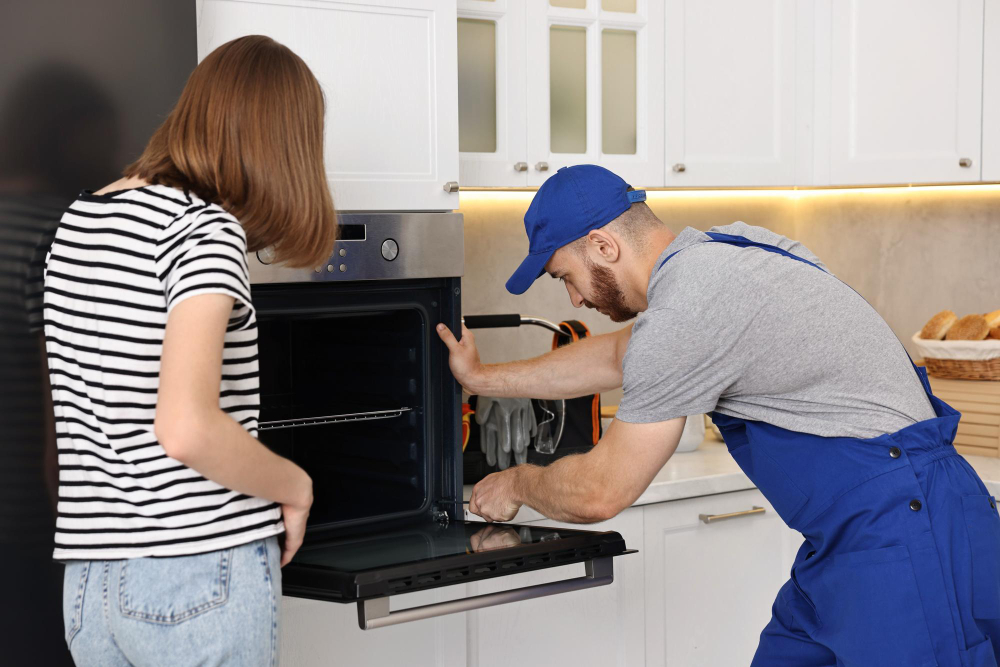
Call a technician if:
The shutoff happens more than once
You see an error code you don’t recognize
You smell burning or notice scorch marks near the control panel
The oven has shut off during self-clean (this cycle runs at very high heat and stresses failing components fastest)
Basic checks (breaker, door seal, vents) don’t resolve it
A trained technician can pinpoint the exact failed component with diagnostic tools rather than replacing parts by trial and error, which saves you money in the long run.
“Don’t just take our word for it — read what local homeowners say about their repair experience with us.”
What Does Oven Repair Typically Cost?
Repair costs vary depending on the part and oven model, but here’s a general range for the most common repairs:
Repair | Typical Cost Range |
|---|---|
Temperature sensor replacement | $120 – $220 |
Igniter replacement (gas) | $150 – $280 |
Heating element replacement (electric) | $150 – $300 |
Control board replacement | $250 – $450 |
Door switch or seal repair | $100 – $200 |
Actual pricing depends on your oven’s make, model, and the extent of the issue. We provide upfront pricing before any repair begins.
Preventing Future Shutoffs
Keep vents and the area around the oven clear for proper airflow
Avoid running self-clean cycles excessively this is one of the most stressful cycles on internal components
Wipe down door seals regularly to maintain a tight seal
Schedule a maintenance check if your oven is more than 8–10 years old
Address minor issues (slow preheating, odd smells, occasional error codes) before they become full shutoffs
Frequently Asked Questions
1. Why does my oven keep turning off?
2. Is it safe to use an oven that shuts off?
3. Can a thermostat or sensor cause this problem?
4. Should I repair or replace my oven?
5. How quickly can I get an oven repaired?
Get Your Oven Diagnosed by a Local Technician
If your oven continues shutting off unexpectedly, scheduling a professional oven repair can help prevent further damage and get your kitchen back to normal faster. A Absolute Appliance Repair Inc. has been repairing ovens, ranges, and other kitchen appliances throughout Lake and McHenry Counties for over 17 years, including Mundelein, Libertyville, Lake Zurich, Gurnee, Crystal Lake, McHenry, Island Lake, and Lindenhurst.
Call 847-949-4011 to schedule a diagnosis, or contact us online to get a same-day appointment.