
Is Hard Water Killing Your Ice Maker? The Hidden “Hard Water Cost” on Chicago Appliances
Is your ice maker producing smaller, cloudier cubes, or making strange clicking noises? You might be paying a “hard water cost” without even realizing it. While the water coming out of your tap in the Chicago area is perfectly safe to drink, the minerals hidden inside it are quietly waging a war on your home appliances.
For homeowners throughout the Chicago suburbs and city limits, understanding the relationship between local water quality and appliance longevity is the difference between a simple maintenance check and a $500 repair bill. Here is everything you need to know about how hard water affects your ice maker and what you can do to stop the damage.
Professional repair services that handle all major kitchen appliance issues with speed and precision, can help you detect these problems early and prevent costly breakdowns.
Hard Water: The Silent Appliance Killer in Illinois
To understand why your ice maker is struggling, we first have to look at what is flowing through your pipes. Hard water is simply water that contains high concentrations of dissolved minerals, primarily calcium and magnesium.
Why Chicago’s Local Water Quality Matters
Depending on where you live in the Chicago metropolitan area, your water travels through various geological deposits before reaching your home. While these minerals are harmless (and sometimes even healthy) for human consumption, they are devastating to mechanical systems found in local kitchens.
Harmless to Drink, Harmful to Machines
Your stomach can process calcium easily, but your refrigerator’s delicate internal valves cannot. When hard water is frozen, these minerals solidify, leaving behind a chalky residue known as scale; a common sight for anyone dealing with Chicago’s unique water profile.
The Hidden Cost of Neglecting Hard Water
Most homeowners ignore their water quality until an appliance stops working. This is what experts call the “Hard Water Cost.” It isn’t a bill you get in the mail; it’s the accumulated cost of frequent repairs, premature part replacements, and spiked energy bills.
The Cost of “Invisible” Damage
You don’t see the damage until the ice maker fails, the water flow slows to a trickle, or you start noticing issues like your refrigerator leaking water. By then, the “hard water cost” has already been collected in the form of internal wear and tear damage that could have been prevented with basic filtration or water softening tailored to local conditions.
The Cholesterol Analogy: Clogged Arteries in Your Fridge
The easiest way to visualize mineral buildup is to think of it as “cholesterol” for your appliances. Just as plaque builds up in human arteries and restricts blood flow, minerals build up inside your ice maker’s “veins.”
From Pipes to Valves
As the water flows, microscopic bits of calcium stick to the walls of the pipes and valves. Over months and years, these layers thicken, leading to “clogged arteries” that force your ice maker’s pump and motor to work twice as hard to move the same amount of water a major cause of service calls across Chicago households.
How Mineral Buildup and Scale Actually Happen?
The process of making ice actually accelerates mineral damage. When water freezes, the H2O molecules crystallize, but the minerals stay behind.
The Formation of Scale
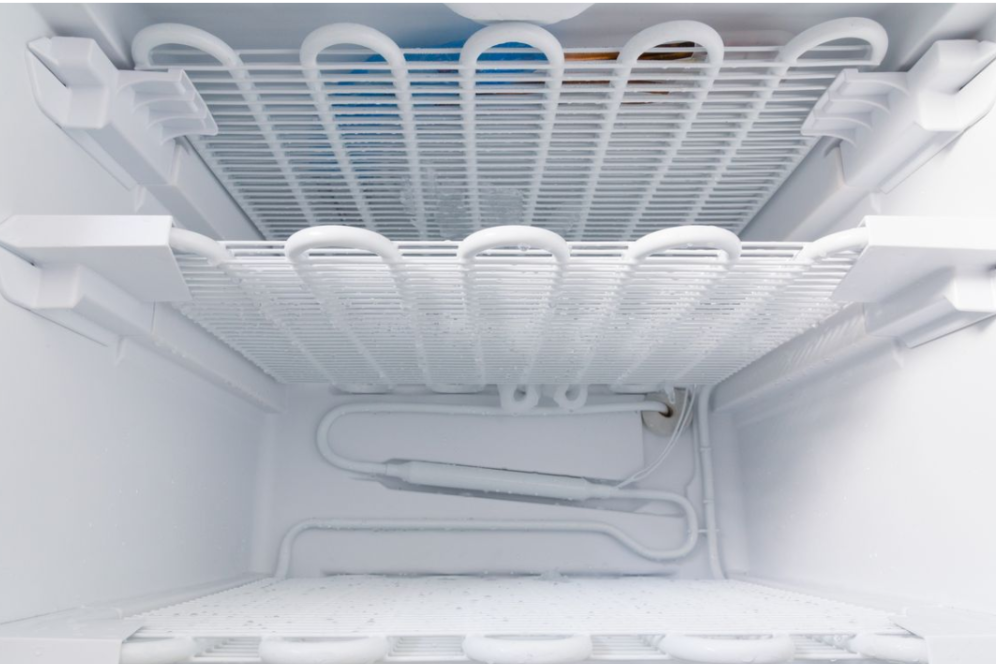
Over time, these leftover minerals solidify into a stubborn, chalky white layer known as limescale, which aggressively coats the internal infrastructure of your appliance. This buildup narrows water lines to restrict flow, accumulates on evaporator plates to interfere with the delicate freezing process, and encrusts water inlet valves, preventing them from sealing properly and leading to persistent leaks or mechanical failure.
Early Warning Signs Your Ice Maker is Struggling
You don’t have to wait for a total breakdown to know there is a problem. Your ice maker will give you several “cries for help” if you know what to look for:
Changes in Ice Quality
- Smaller or Hollow Cubes: Not enough water is reaching the mold.
- Misshaped Cubes: Water is spraying unevenly due to scale in the nozzle.
- Cloudy or Bad-Tasting Ice: This is a sign of high mineral concentration trapped in the cube.
Operational Red Flags
If you notice slow ice production or strange clicking noises, your machine is likely straining against a blockage. Inconsistent water flow is almost always a sign that the “clog effect” has taken hold in your Chicago kitchen.
The "Clog Effect" and Component Damage
When scale blocks water flow, the reduced pressure means less water enters the ice mold. This leads to poor ice formation, but the deeper issue is the damage to the Water Inlet (Solenoid) Valve.
Why the Solenoid Valve Fails
The solenoid valve acts as the mechanical “gatekeeper” that regulates water flow into your refrigerator, but mineral buildup on its seal leads to two critical failure points: Failure to Close, where the valve remains slightly open and causes constant leaking or a completely frozen unit, and Valve Burnout, where the internal electrical components eventually snap or short out from the extreme strain of trying to move mineral-caked parts.
The Economic and Operational Impact on Your Household Budget
Hard water doesn’t just cause breakages it makes your appliance much more expensive to run and maintain. Scale acts as an insulator, and when it coats the freezing elements, the machine has to run longer cycles to reach the required temperature. This not only increases energy consumption but also leads to rising repair costs over time as internal components wear out faster.
In high-mineral environments like Chicago, hard water significantly compromises appliance performance. The result is higher electricity usage, inflated monthly power bills, and a drastically shorter lifespan where an ice maker designed to last 10 years may fail in just 5 without proper maintenance.
Proactive Maintenance: Strategies to Protect Your Appliance Investment
The good news is that you can stop the “Hard Water Cost” before it drains your bank account.
Steps to Take Today:
- Install a Water Softener: This treats the water for the whole house, removing minerals before they enter your pipes.
- Replace Filters Every 6 Months: Don’t wait for the “change filter” light. In the Chicago area, filters often clog faster than the manufacturer’s estimate due to sediment.
- Regular Descaling: Periodically cleaning the system with a food-safe descaler can dissolve early-stage buildup.
- Professional Inspections: A technician can catch a failing valve before it leaks and ruins your kitchen flooring.
Why Proactive Care Outperforms Costly Repairs
Hard water doesn’t break your ice maker instantly; it kills it slowly from the inside out. By the time you see the “calcium crust” on the outside, the internal components are already under massive strain. Taking proactive steps today ensures you have clear, fresh ice for years to come.
Solution by A Absolute Appliance Repair
At A Absolute Appliance Repair, we specialize in diagnosing and reversing the effects of hard water damage throughout the greater Chicago area. We don’t just “swap parts”; we analyze your local water impact and provide solutions that last. Whether you need a solenoid valve replacement or a deep system descaling, our experts are here to help.
Don’t wait for the ice to stop flowing. Contact us today for a professional inspection and protect your Chicago home’s appliances from costly damage.
Frequently Asked Questions (FAQs)
Q1: Can I just clean the ice maker with vinegar?
Ans: While vinegar can help with surface scale, it often isn’t strong enough to clear deep blockages in the water lines or the solenoid valve common in Chicago plumbing. Professional descaling is recommended for heavy buildup.
Q2: Is cloudy ice always caused by hard water?
Ans: Not always, but it is the most common cause. Cloudiness occurs when minerals and gases are trapped during the freezing process. Improving your filtration usually clears this up.
Q3: How often should I have my ice maker serviced?
Ans: In areas with high mineral content like the Chicago suburbs, we recommend a professional inspection and cleaning once a year to prevent the “Clog Effect.”
Q4: Will a standard fridge filter remove hard water minerals?
Ans: Most standard carbon filters are designed to improve taste and remove chlorine, but they do not “soften” water. To remove calcium and magnesium, you typically need a specialized scale-inhibitor filter or a whole-home softening system.